India’s block printing tradition is among the oldest continuously practised textile arts in the world. Archaeological evidence from the Indus Valley Civilisation (3500–1300 BC) confirms that cotton was printed and dyed in India over 5,000 years ago. Today, eight distinct regional block printing techniques survive each a living record of the land, culture, and craft community where it was born.
At Indian Fabrico, everything we make traces back to this heritage. Our bedsheets, curtains, cushion covers, and towel sets use authentic Sanganer-style block printing from Jaipur artisans a tradition refined over centuries to produce the patterns you see on our products today.
What is hand block printing?
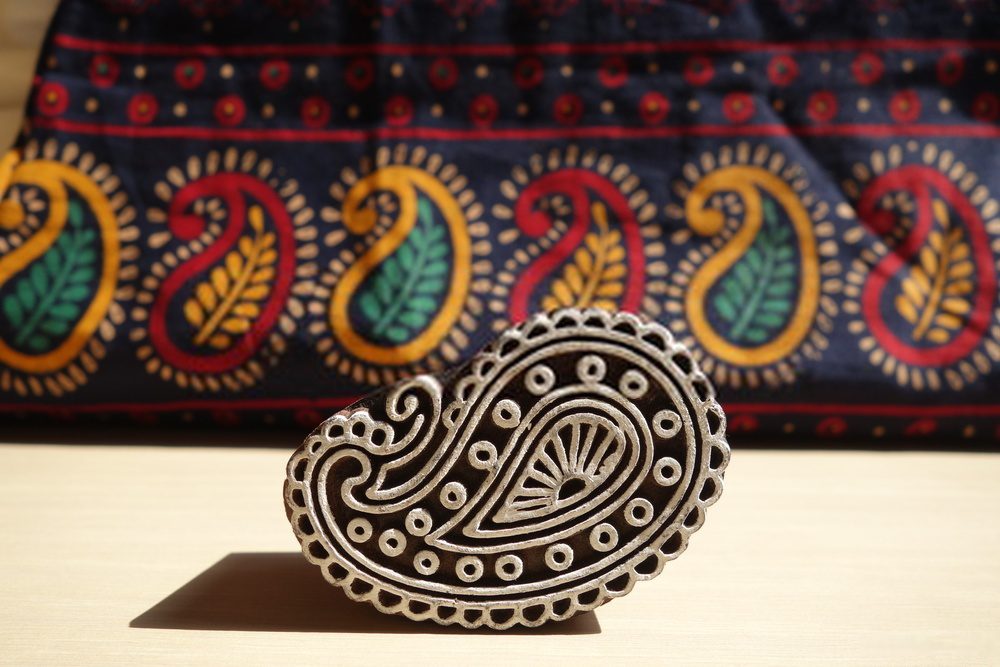
Hand block printing is the process of pressing carved wooden or metal blocks, dipped in dye, onto fabric to transfer a repeating pattern. Each colour in a design requires a separate, precisely carved block. The printer stamps each block by hand, aligning it against the previous stamp, then moves to the next repeat. Multi-colour designs require multiple passes one per colour with careful registration to keep patterns aligned.
The beauty of authentic hand block printing lies in its slight imperfection. Where machine printing produces a perfectly uniform pattern, hand block prints carry subtle variations in colour depth and pattern alignment from stamp to stamp. These variations are not flaws they are the visual evidence of human hands and skill.
| How to identify genuine hand block printing: Look for slight colour variation across the fabric, visible dye penetration on the reverse side, and minor pattern overlap at repeat joins. Machine prints are perfectly uniform throughout. |
The 8 major Indian block printing traditions
1. Sanganer printing Jaipur, Rajasthan
Sanganer, a town 16 km south of Jaipur, is the heartland of the block printing style used across Indian Fabrico’s range. Sanganer printing is defined by fine floral and paisley motifs on white or light-coloured cotton backgrounds, executed in vibrant AZO-free dyes: pinks, blues, reds, and greens.
The technique uses pre-treated cotton laid on long padded printing tables. A master printer stamps the pattern block by block each colour applied separately with its own carved block. The fabric is then dried, washed, and finished. Indian Fabrico’s hand block printed curtains,
2. Bagru printing Bagru, Rajasthan
Bagru printing uses the dabu (mud-resist) technique a paste of clay, lime, gum, and wheat chaff is applied to the fabric before dyeing. When dipped in the dye bath, the resist-coated areas remain undyed, creating the pattern through negative space rather than positive stamping. Bagru prints are earthy and geometric: indigo, rust, black, and deep brown from natural dyes.
The contrast with Sanganer is striking where Sanganer is fine, floral, and vibrant, Bagru is bold, geometric, and natural. Both are authentic Rajasthani traditions; Sanganer is more commonly used in everyday home textiles while Bagru finds its home in heavier furnishing fabrics and statement pieces.
3. Bagh printing Bagh, Madhya Pradesh
Bagh printing is indigenous to the Bagh district of Madhya Pradesh and practised by the Khatri community, whose ancestors migrated from Sind centuries ago. The technique uses natural dyes derived from the chemical properties of the local Bagh River minerals in the water produce tones impossible to replicate elsewhere. Bagh prints are bold and geometric, inspired by Mughal patterns, in rich reds, blacks, and deep blues.
The process involves multiple stages of washing, mordanting, printing, and natural dyeing highly labour-intensive and produces fabric that deepens in colour with each wash rather than fading.
4. Kalamkari Andhra Pradesh
Kalamkari (from kalam meaning pen) is both a hand-drawing and block printing tradition from Andhra Pradesh, with two distinct regional styles. The Srikalahasti style uses a bamboo pen to hand-draw intricate mythological scenes. The Machilipatnam style uses carved wooden blocks to print similar designs more uniformly across the fabric.
Kalamkari subjects are drawn from Hindu mythology deities, temple scenes, and nature motifs. The colour palette is earthy: black outlines with red, blue, yellow, and green from natural dyes including pomegranate, indigo, and iron mud. Kalamkari is used for sarees, wall hangings, and statement home textiles.
5. Ajrakh Kutch, Gujarat and Barmer, Rajasthan
Ajrakh is one of India’s most complex textile traditions a double-sided block-resist printing process that involves 14 to 16 stages and can take up to three weeks per piece. The name derives from the Arabic azraq (blue), and indigo is central to its colour story alongside deep madder red.
The intricate geometric patterns of Ajrakh are rooted in Islamic art, reflecting the heritage of the Khatri artisan community. Genuine Ajrakh uses entirely natural dyes indigo, alizarin from madder root, and iron-based blacks. It is printed on both sides, making it reversible. Ajrakh-inspired prints appear in bedsheets, kantha-style throws, and statement home textiles.
6. Bandhani Gujarat and Rajasthan
Bandhani is a tie-and-dye technique rather than a printing method, but it is deeply integrated into India’s block print textile tradition and often combined with printed fabrics. Tiny points of fabric are tied tightly with thread before the piece is immersed in dye. When the ties are removed, the undyed dots create the pattern against the dyed ground.
Bandhani patterns range from simple uniform dots to complex arrangements of circles, flowers, and lattice work. The technique is used for sarees, dupattas, and home textiles including pillow covers and lightweight throws. Combined with block print borders, Bandhani-influenced designs are a staple of Rajasthani home linen.
7. Dabu printing Rajasthan
Dabu (also written Daboo) is Rajasthan’s mud-resist printing tradition, closely related to Bagru but with its own distinct regional character. A paste of clay, lime, gum, and wheat husk is applied to the fabric using carved wooden blocks a resist rather than a direct dye application. The fabric is dusted with sawdust to prevent sticking, dried in the sun, then immersed in natural dye.
The resist areas emerge as pale against a dyed ground multiple applications create layered, complex effects. Dabu produces the muted, organic tones currently most popular in contemporary Indian home interiors and wellness-focused design.
8. Batik printing
Batik uses wax rather than mud as its resist medium. Hot wax is applied to the fabric using a copper stamp or flowing tool (canting). The fabric is then dyed, and the wax is removed by boiling leaving the original cloth colour beneath. The characteristic crackle pattern where the wax fractures and dye seeps in is a sought-after feature of batik that no machine process can replicate.
Batik originated in Java, Indonesia, but has been practised in India for centuries. Indian batik is produced primarily in Rajasthan, West Bengal, and Maharashtra, predominantly on cotton fabric.
What Indian Fabrico’s block print collection includes
Indian Fabrico sources all block-printed products directly from Jaipur’s Sanganer artisan community no middlemen, no imported fabrics. Our hand block printed curtains use 100% cotton with traditional Sanganer motifs in AZO-free dyes, available in door and window sizes.
Our block print cushion covers and
The hand block towel set collection brings Jaipur’s craft tradition into the bathroom 100% cotton, machine washable, available in traditional motifs. Browse the full
How to care for hand block printed fabric
- Wash new block print items separately in cold water for the first 2–3 washes to prevent any initial dye transfer.
- After the initial washes, machine wash on a gentle cycle in cold water with mild liquid detergent.
- Avoid bleach or hot water both can cause premature fading in any dyed fabric, not just block prints.
- Air dry in shade. Direct sunlight for extended periods will fade natural and AZO-free dyes over time.
- Iron on a cotton setting while slightly damp for the crispest finish. Block print cotton responds beautifully to gentle ironing.
Frequently Asked Questions (FAQs)
Hand block printing is a traditional Indian textile technique where carved wooden blocks are dipped in dye and stamped repeatedly onto fabric. Each colour requires a separate block. The process is entirely manual no machines or screens. Authentic hand block prints from Jaipur’s Sanganer region show slight colour variation and pattern irregularity that machine printing cannot replicate.
Sanganer printing produces fine floral and paisley motifs in vibrant colours on light cotton backgrounds delicate, detailed, and well-suited to bedsheets and curtains. Bagru printing uses a mud-resist (dabu) technique creating earthy geometric patterns in indigo, rust, and brown. Both are from near Jaipur, Rajasthan. Indian Fabrico uses primarily Sanganer-style printing for its home linen range.
Quality block print bedsheets using AZO-free fixed dyes are colourfast after the first wash. Wash new pieces separately in cold water for the first 2–3 washes as a precaution. After that, colours remain stable. Avoid bleach or hot water, which cause fading in any dyed fabric. Indian Fabrico uses AZO-free dyes across all block-printed products.
Yes, Indian Fabrico’s hand block printed curtains are made from 100% cotton fabric using traditional Jaipur Sanganer block printing by skilled artisans. Each curtain features authentic Rajasthani floral and paisley motifs printed in AZO-free dyes. Available in door and window sizes with matching bedsheet and cushion cover options.
A double bedsheet with a 2–3 colour Sanganer block print typically requires a full day’s work by one skilled printer including fabric preparation, block registration, multi-colour printing, drying between colour applications, and post-print washing. More complex multi-colour designs take proportionally longer. This craftsmanship is embedded in every authentic Jaipur block print product.
Jaipur bedsheets primarily use the Sanganer technique fine floral and paisley motifs on cotton using AZO-free dyes. Some Jaipur products also incorporate Dabu (mud-resist) elements for earthy, contemporary tones. Indian Fabrico sources exclusively from Jaipur’s Sanganer artisan community for all block-printed home linen.